
Fuel being a scarce resource hike in petrol and diesel is a given. But smart stock market investors can still benefit from these regular price hikes.

ICICI Securities has estimated that the recent hike in fuel prices will result in a reduction of about Rs 26,000 crore (Rs 260 billion), or 40 per cent, in the subsidy burden of the oil marketing companies due to higher realisation.
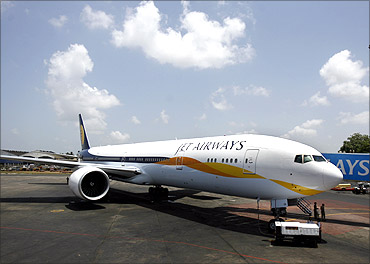
Jet fuel constitutes over 40 per cent of an airline's operating costs and the price cut will bring relief to the cash-strapped carriers.
Petrol and diesel prices, which have been on a freeze for the past four months in view of assembly elections in states like Uttar Pradesh, need to be increased by over Rs 12 per litre by March 16 for fuel retailers to break even. International crude oil prices shot above $120 a barrel for the first time in nine years on Thursday before retreating a little to $111 on Friday, but the gulf between cost and retail rates has only widened. With international oil prices - on which domestic fuel retails are directly benchmarked - spiking in the last two months, state-owned fuel retailers "need a massive price hike of Rs 12.1 per litre on or before March 16, 2022, just to breakeven and a price hike of Rs 15.1 is required" after including margins for oil firms, ICICI Securities said in a report.

Government-controlled oil-marketing companies (OMCs) have held back petrol and diesel price revisions for a week and are expected to continue doing so, ostensibly owing to political reasons. It appears that the Centre has informally conveyed to the three major OMCs to not revise fuel prices for the time being, two people in the government said. This informal directive follows the talks between the Centre and states on cutting taxes and bringing the auto fuels under the good service tax regime not fetching the desired results, so far.
The Prime Minister-appointed B K Chaturvedi panel is believed to have suggested raising fuel prices every month to bring them at par with production cost and has sought imposition of a 'Super Profit Tax' on oil fields awarded before 1999.

ATF price in Delhi has been raised by Rs 272.77 to Rs 42,452.02 per kilolitre, an Indian Oil official said.

If crude prices have increased, retail petro product prices should go up.

Jet fuel constitutes over 40 per cent of an airline's operating costs and the price increase will raise the financial burden on cash-strapped carriers.
Petrol price hiked by 60 paise per litre, diesel by 50 paise.
Retail inflation eased to 7.04 per cent in May, mainly on account of softening food and fuel prices as the government as well as the RBI stepped in to control spiralling price rise by way of duty cuts and repo rate hike. However, the inflation print stayed above the Reserve Bank's upper tolerance level of 6 per cent for the fifth month in a row. The Consumer Price Index (CPI) based retail inflation was 7.79 per cent in April.

Moody's statement comes on a day when opposition parties are observing nation-wide strike to protest against the price hike and government's move to operationalise its decision on allowing foreign direct investment in multi-brand retail.
This will have an impact on inflation as everyone in the value chain passes on the costs.
Petrol and diesel prices in the national capital have been raised marginally following the state government's decision to levy sales tax on the two auto fuels.
Petrol and diesel prices were on Monday hiked by 40 paise a litre each, taking the total increase in rates in the last two weeks to Rs 8.40 per litre. Petrol in Delhi will now cost Rs 103.81 per litre as against Rs 103.41 previously, while diesel rates have gone up from Rs 94.67 per litre to Rs 95.07, according to a price notification of state fuel retailers.
The next review to raise rates rates in slated in December.
Petrol and diesel prices were on Tuesday hiked by 80 paise a litre each, taking the total increase in rates in the last two weeks to Rs 9.20 per litre. Petrol in Delhi will now cost Rs 104.61 per litre as against Rs 103.81 previously, while diesel rates have gone up from Rs 95.07 per litre to Rs 95.87, according to a price notification of state fuel retailers.
Amid the crisis in Libya, increase in fuel prices would become 'inevitable' if crude oil remains at $100 per barrel, Prime Minister's Economic Advisory Council chairman C Rangarajan said on Monday.
The airline industry remained largely undecided on the exact quantum of increase in fares following the hike in ATF prices. Industry sources, however, said the prices might increase by Rs 150 for short haul routes and Rs 300 for long haul routes.
Trinamool Congress MPs are likely to meet Prime Minister Manmohan Singh in Delhi on November 8 against the backdrop of the UPA ally's threat to pull out of the government on the petrol price rise issue.
The government has no plans to raise fuel prices in the immediate future and will take a decision in this regard at an "appropriate time", Petroleum Minister Murli Deora said on Tuesday. "An appropriate decision on fuel price will be taken at an appropriate time," Deora said at the Economic Editors' Conference in New Delhi.

The central bank is yet to consider actions such as a rate hike or mobilising dollar inflows from non-resident Indians to boost forex reserves as it cannot afford to continue with them for long when the rupee's internationalisation tops its agenda, explains Tamal Bandyopadhyay.

India's top cement producers delivered a solid July-September quarter (Q2) in 2025-26 (FY26), lifted by firmer prices, higher sales volumes, and a favourable base. Seasonal weakness and maintenance outages did dent sequential performance, but the overall picture remained positive - and the road ahead looks steady.
Cooking gas LPG prices may be hiked next week after under-recovery on the fuel widened to over Rs 100 per cylinder, sources said insisting that the rate hike, including the quantum of increase, is dependent on government permission. If allowed, this will be the fifth increase in cooking gas rates across all categories - households using subsidised gas for cooking and heating purposes, non-subsidised fuel and industrial-sized gas. LPG rates were last hiked by Rs 15 per cylinder on October 6, taking the total increase in rates since July to Rs 90 per 14.2-kg cylinder.
This is the fourth increase in auto fuel prices since May 1
The ministry, however, clarified that there was no change in the prices of kerosene and LPG.

Congress president Mallikarjun Kharge alleged that the price of domestic cooking gas cylinder has been raised by Rs 50 and that of commercial gas cylinder by Rs 350 at a time when every person in the country is facing the brunt of high inflation.

It is currently working out the details of the quantum of price increase, which will vary depending on the model.
Goods transporters and petrol dealers association in Maharashtra claimed on Wednesday that they were being denied fuel at petrol pumps which could impact prices of commodities. "Our vehicles across the state are getting only about 70 per cent of the fuel and as a result of which they are being delayed (to reach destinations)," Prakash Gavali, president of the Maharashtra Rajya Truck Tempo Tankers Bus Vahtuk Mahasangh, which represents transporters, said.

The price of aviation turbine fuel, or jet fuel, in Delhi was hiked by Rs 1,039.1 per kilolitre, or 1.7 per cent, to Rs 62,208.18, according to Indian Oil Corp, the nation's largest oil firm.

After two days of lull, petrol and diesel prices on Thursday were again hiked by 35 paise per litre, sending retail pump prices to their highest ever level across the country.
Expressing concern over the impact of rising crude oil prices on Indian economy, Prime Minister Manmohan Singh on Monday said it can have adverse consequences for the economy. "We cannot allow the subsidy bill to rise any further," Singh said and appealed to all the political parties to adopt a wider consensus on the pricing issue.

Oil Minister Murli Deora on Friday indicated there would be no rollback in fuel price hike and hit out at Opposition for "misleading" people on the impact of the rise.

State-owned Indian Oil, Bharat Petroleum and Hindustan Petroleum currently lose Rs 180 crore per day.
Prime Minister Dr Manmohan Singh addressed the media persons onboard Air India One on his return from G-20 Summit in Toronto.
State-run oil companies on Wednesday raised prices of aviation turbine fuel, or ATF, for the third time in a month, this time by about 6.7 per cent, in step with international rates, which are firming up.
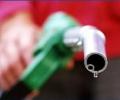
The government is considering a 3-rupee to 5-rupee hike in the price of diesel, which accounts for more than 40 percent of fuel use, government officials said last week, as the country looks to cut import costs by nearly $20 billion to trim a record current account deficit.
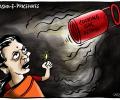
Uttam Ghosh offers his take on the rise in the price of fuel and cooking gas
Petrol, diesel, LPG and kerosene prices are unlikely to be revised immediately as the Congress-led Government, which is yet to assume office
